Executive summary
Hypergrowth, compound growth of at least 25% a year, is the ambition of many companies and the experience of few. Of the 960 companies in our data, 27 met our test: average growth of at least 25% a year, and at least double the growth of five peers over three years. Most were small and medium-sized businesses.
Their common challenge is balance. Growth rewards agility, informality and speed; scale demands structure, sustainability and disciplined execution. Companies that lose the balance in either direction stall, some in improvisation and others in bureaucracy.
The leaders who keep the momentum revisit vision and purpose every six to twelve months and check whether the leadership team still fits the business. They introduce processes and governance that scale without slowing decisions, hire for the vision rather than for headcount and protect the culture as numbers grow. They keep their focus as they enter new markets, stay close to customers and manage cash as carefully as growth.
Start by asking what the business has outgrown since the last review, and fix that first. The question is not only how quickly a company grows but how well it scales.
In this paper
According to The World Economic Forum, a company achieves hypergrowth when it reaches a compound annual growth rate (CAGR) of at least 25% over two years. It’s the steep part of the growth learning curve, as experienced by global giants such as Facebook, Google and Amazon.
Hypergrowth is the dream of any ambitious company - a period of rapid expansion that leads to increased revenue, market dominance and competitive advantage. However, while many companies achieve early success, few sustain hypergrowth over the long term. Scaling at speed brings significant challenges, including operational inefficiencies, leadership strain, cultural dilution and market unpredictability.
It can be exciting and terrifying at the same time. As Kurt Uhlir of NAVTEQ, now called HERE Technologies, described hypergrowth, “It feels like surfing on a tsunami, but if you can stay afloat, the ride is life-changing.”
So, how can you, as a leader, achieve this type of growth and more importantly maintain the momentum?
As global leader of McKinsey’s Organisation Practice and later CEO of Heidrick Consulting, I (Colin) have been involved for many years in helping companies attain hypergrowth status and overcome the associated challenges. When my colleague, Scott Keller, and I published Beyond Performance in 2011, our research demonstrated that various dimensions of organisational health, such as alignment on direction, execution at pace and the ability to adapt to new challenges were key predictors of economic value creation.
And in 2017, my business and life partner, Sharon Toye, and I built on that foundation by co-authoring Accelerating Performance, highlighting speed’s critical role in organisational success. The book focused on a group of ‘super-accelerators’ or standout companies that could accelerate organic growth better than their competitors.
We have since set up our consultancy, Accelerating Performance Consulting, where we work with leaders of hyper-growth portfolio companies across a number of Private Equity firms in the UK and Europe. Our data-driven approach has led us to discover that the key to competitive success is no longer strategy but the ability to mobilise, execute and transform with agility.
It feels like surfing on a tsunami, but if you can stay afloat, the ride is life-changing.” Kurt Uhlir
Find out more about our recent findings in the article below:
Our view on hypergrowth
Over recent months, we’ve been doing a great deal of empirically based research. We commissioned five pieces of data collection that have spawned Speed Wins, Leadership Alpha and Challenging Teams. Thought leadership pieces on first-time CEOs and Complexity are also in the pipeline.
Across these topics, we’ve gathered data from 960 companies. Huge thanks to all who have generously ‘opened the kimono’. As we dived into the data, we found there was a subset of hyper-growth companies. This intrigued us as our research for the book, Accelerating Performance, comprehensively demonstrated that organic revenue growth, compared to peers, is the best predictor of future enterprise value.
So, we took a look at the data and identified 27 hyper-growth companies. The criteria we used were;
• Must have grown by an average of 25% p.a. for the previous three years
• Must have grown by at least double the average of a peer set of five companies over three years
• Could not have negative profit in any of the three years
• Growth must be organic rather than through acquisition
• Must have no serious regulatory or legal issues outstanding
It’s fantastic for those 27 companies but tricky for us to apply our usual method of correlating behaviour with performance. 27 just isn’t a big enough sample size to draw robust empirical conclusions. So, we decided to interview the most senior handful of people in each of these companies. 19 of the 27 are owned by private equity houses (four privately held and four public companies), where we interviewed the lead partner responsible for the company.
This qualitative approach led us to believe the primary challenge for a hyper-growth company is balance. How to balance growth and stability? Aggression and prudence? Experimentation with efficiency?
Our criteria exclude some undoubtedly great companies. AstraZeneca posted a 21% rise in revenue for FY 24. That’s outstanding for a large company. And Astra is, in fact, the largest company listed in the FTSE, so such a strong rate of growth in such a big company is to be applauded. But they haven’t (yet) sustained hypergrowth for multiple years.
Our rigorous criteria do have the effect of nudging our sample group into small and medium-sized enterprises. It’s super tough for a huge company to grow at a belting pace year after year. We’ve seen some firms grow their enterprise value, as opposed to their organic revenue, rapidly. Perplexity is a new rival to ChatGPT and its EV growth is off the chart. But that’s the capital markets’ enthusiasm for future revenue growth showing up in the multiple, not actual revenue growth.
We also excluded very small firms from our sample. It’s not difficult to grow by 200% if your revenue is only £2m.
The Harvard Business Review first coined the term “hypergrowth” in 2008, defining it as a point “where the winners get sorted from the losers.” To be a winner, you need to fully understand hypergrowth - not just how to achieve it but how to maintain it and manage the turbulence it creates.
Our 27 brave volunteers clearly understand this and are managing to navigate the issues well - their results are outstanding. So we asked them for their hints and tips and have compiled them into a checklist every company could use to test their own hyper-growth capabilities.
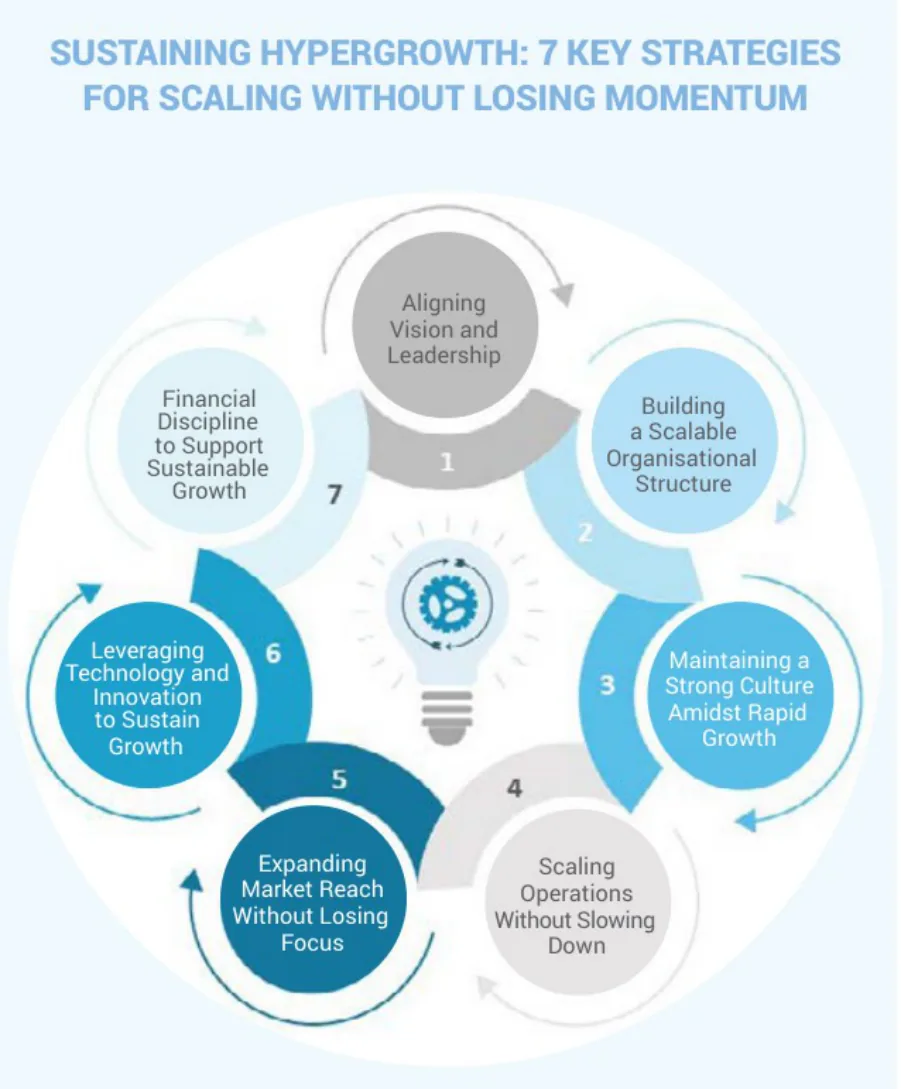
To maintain hypergrowth, companies must balance agility and structure, speed and sustainability, plus innovation and execution. Discover how fast-growing companies can keep scaling without collapsing under their own weight.
Make sure leadership decisions reflect long-term objectives rather than short-term pressures.
1. Aligning Vision and Leadership
A rapidly growing company cannot afford an ambiguous or outdated vision. As a company scales, its market, competitors and opportunities will shift, so it needs to recalibrate its strategic priorities. Our whitepaper Leadership Alpha focused on the leadership traits most closely associated with outstanding performance and need for ‘Direction - a clear vision of where you’re going’ rated highly.
We recommend you reassess your company’s vision, mission and purpose every 6-12 months. Communicate strategic adjustments clearly across all levels of the organisation. And make sure leadership decisions reflect long-term objectives rather than short-term pressures.
Leadership Adaptability
As a company grows, the leadership team must evolve alongside it. Founders and early executives often struggle to move from hands-on execution to high-level strategy. The skills required to build a company from scratch are not always the same as those needed to scale a company beyond 1,000 employees.
To address this, assess leadership capabilities frequently. Remember, there are key differences between a ‘boss’ and a ‘leader’. Does your existing team have the skills to scale? Hire experienced people who have successfully navigated hypergrowth before. Encourage a learning culture within your leadership team so that even senior leaders continuously develop new capabilities.
2. Building a Scalable Organisational Structure
Your organisation needs to be ready to scale quickly if you want to keep up with exponential growth.
In the early days, startups thrive on agility and informality - fast decision-making, flexible processes and minimal hierarchy. As a company scales, however, these qualities can become liabilities if not adapted.
So, to maintain hypergrowth without losing efficiency, introduce structured yet flexible processes. That way, you can keep order while still allowing innovation. Create detailed road maps, identify important key performance indicators (KPIs) and codify your product’s lifecycle. These strategies will help you stay on track as you adapt to changing market conditions.
You also need to implement strong governance without overburdening your teams with bureaucracy. And remember to focus on clarity of roles as hypergrowth often leads to overlapping responsibilities and confusion.
It’s also important to keep scalability in mind with every decision about your company. Whether you’re selecting suppliers, hiring talent or building infrastructure, you need to choose strategies that can expand rapidly according to growth. Remember, your business model, team culture and company structure must be designed to climb a steep growth curve without losing ground.
Hiring for scale, not just speed
A hyper-growth company requires strategic hiring, not just rapid expansion of headcount, as poor decisions can lead to misalignment, inefficiencies and cultural drift. Make sure your recruitment is in line with your hypergrowth by prioritising candidates with scaling experience or those who have worked in high-growth environments before. Hire passionate professionals who are excited to be on your journey with you and ‘get’ the vision. And keep to your usual hiring guidelines. Don’t sacrifice quality for speed. It’s also key to build leadership depth - scaling requires more than just a great CEO.
Hire passionate professionals who are excited to be on your journey with you and ‘get’ the vision.
3. Maintaining a Strong Culture Amidst Rapid Growth
Many companies experience cultural dilution as they scale, particularly when hiring at a rapid pace. The informal, mission-driven energy of a small team can be lost if culture is not intentionally codified and reinforced.
So, articulate the core values of the company clearly and integrate them into hiring, onboarding, and performance evaluations. Scale leadership values consistently across all levels. As the founder, you must lead by example. Think about how you can encourage collaboration across different functions to prevent silos.
Scaling Culture Without Losing Identity
Hyper-growth companies often hire aggressively, which means culture can quickly dilute if not intentionally managed. Leadership in these organisations must focus on cultural clarity and reinforcement.
Fast growth is likely to overwhelm employees, leading to burnout and disengagement. Keep your teams motivated by carrying out regular pulse surveys to get real-time feedback. Invest in leadership development at all levels. Promote internal mobility, allowing high-potential employees to grow within the company.
Focus on clarity of roles as hypergrowth often leads to overlapping responsibilities and confusion.
4. Scaling Operations Without Slowing Down
Hyper-growth companies must strike a delicate balance between scalability and speed. Without the right operational foundation, growth will become chaotic.
Key operational priorities include:
• Automating repetitive processes to improve efficiency.
• Standardising workflows where possible but allowing flexibility in execution.
• Optimising decision-making so that not everything requires executive approval.
As we highlighted in Speed Wins, it’s important to look objectively at all your processes for ways to improve efficiency.
Maintaining Speed in Decision-Making
Many companies slow down as they grow due to increased complexity and bureaucracy. To avoid decision paralysis, adopt decentralised decision-making and empower your teams to act autonomously.
You’ll notice hyper-growth companies track every piece of data to understand what works. They view failure as being almost as important as success as it gives them useful knowledge. So, employ data-driven decision-making to reduce uncertainty. And encourage a bias towards action. If you wait for perfect information, you’ll miss valuable opportunities.
5. Expanding Market Reach Without Losing Focus
To avoid struggling with overexpansion or spreading your company too thinly across too many markets or product lines, it’s vital to keep your focus. Protect your core revenue streams before diversifying. Validate new markets and customer segments before committing significant resources. And establish clear criteria for expansion - not every opportunity is worth pursuing.
For many companies, hypergrowth involves expanding into new geographies. However, international expansion is risky if not executed strategically. Economic downturns, competitive threats and regulatory changes can derail hypergrowth. Stay resilient by diversifying revenue streams, building strong cash reserves and maintaining a culture of adaptability.
As you expand internationally, localise go-to-market strategies. Be aware that what works in one country may not work in another. Hire regional leaders who understand local markets. And make sure you’re ready operationally. Scaling globally requires the infrastructure to support it.
Without the right operational foundation, growth will become chaotic.
6. Leveraging Technology and Innovation to Sustain Growth
Technology is a critical enabler of hypergrowth. You must be confident yxour company’s tech infrastructure can scale without bottlenecks.
Key strategies include:
• Investing in cloud-based systems that can scale dynamically
• Adopting modular, API-driven architecture to support rapid innovation
• Ensuring data integrity—bad data leads to bad decisions
• Make a hard-headed evaluation as to where AI can add value
Continuous Innovation and Customer-Centric Focus
Hyper-growth companies cannot afford to stagnate. Innovation must be continuous, not just an occasional initiative. A good way of sustaining innovation is to establish a culture of experimentation and encourage teams to test new ideas. This may mean allocating resources for R&D even in the middle of rapid scaling.
But most importantly, stay customer-obsessed—be a customer-centric company. Innovations often come from solving real customer problems. The payment processing company, Stripe is a good example of this. They began in 2010 and built their product by prioritising the end user’s needs, completely revolutionising how businesses completed transactions. Their valuation is now in the billions. (CNBC 2020/16/04)
Customers can quickly spot brands that value their experience and those that don’t. Hyper-growth companies look for meaningful ways to delight their customers, provide them with real value and find solutions to their problems. They obsess over real-time customer insights and act on them immediately.
Look at Monzo
The Internet bank, Monzo, shows that a new approach to customer experience and using automation while providing value could propel them to hypergrowth. They were able to target a younger demographic by providing simple and seamless banking services to millennials who hate queues and spend much of their time online. Monzo received hundreds of thousands of customers within its first year, experiencing hypergrowth. A great example of producing a new service to an untapped market. (Kurt Uhlir)
But it’s also worth noting that customers don’t always know what their problem is, or they make assumptions. Sometimes, you can get even better insights by asking those who didn’t buy from you - what stopped them? This way, you may come up with a truly disruptive product that changes the way customers interact or shifts the industry permanently.
Be confident your company’s tech infrastructure can scale without bottlenecks.
7. Financial Discipline to Support Sustainable Growth
Growth requires capital, but hypergrowth can quickly burn through cash if not managed carefully. Keep a close eye on the cost-effectiveness of the business at the most fundamental level, i.e, of each product or service. This will allow you to ensure your profitability scales with growth. In Leadership Alpha we highlight the importance of deep financial literacy and the fact that leaders must know their numbers.
You also need to make sure you secure access to capital, whether that’s through venture funding, debt or retained earnings. And avoid reckless spending. Hyper-growth companies tend to overspend on hiring, marketing or expansion without any clear ROI.
Avoid taking shortcuts when there’s a more thorough way to solve a problem permanently. This is especially true for taking on technical debt, which you should avoid at all costs. A cheaper or easier solution may seem appropriate now, but it won’t necessarily help you in the long run when you have a massive influx of customers and must scale quickly.
Growth Trade-Offs
Beware financial collapse. In traditional companies, finance leaders focus on steady, predictable returns.
In hyper-growth firms, financial strategy must balance aggressive expansion with capital efficiency. And not all growth is good growth. Growth at all costs can mask profitability issues. So, you need to prioritise investments that drive sustainable revenue rather than short-term expansion. Many hyper-growth firms fail after their initial surge but if you plan for long-term financial health rather than short-term metrics, you’ve got more chance of success.
Hypergrowth fueled by aggressive marketing spend is unsustainable. You need to ensure that revenue growth is efficient and scalable. So, adopt the following best practices:
• Invest in customer retention - existing customers are more valuable than constantly acquiring new ones
• Scale predictable revenue streams, such as subscriptions or recurring sales
• Align sales and marketing strategies with long-term business goals
Some real-life hyper-growth stats
When we describe the criteria to be a hyper-growth company, it may seem as though we’re trying to make the criteria so tight that finding a hyper-growth company is like finding a needle in a haystack. But here are Fortune’s top 25 fastest-growing companies. Look at their numbers. They’re pretty impressive.
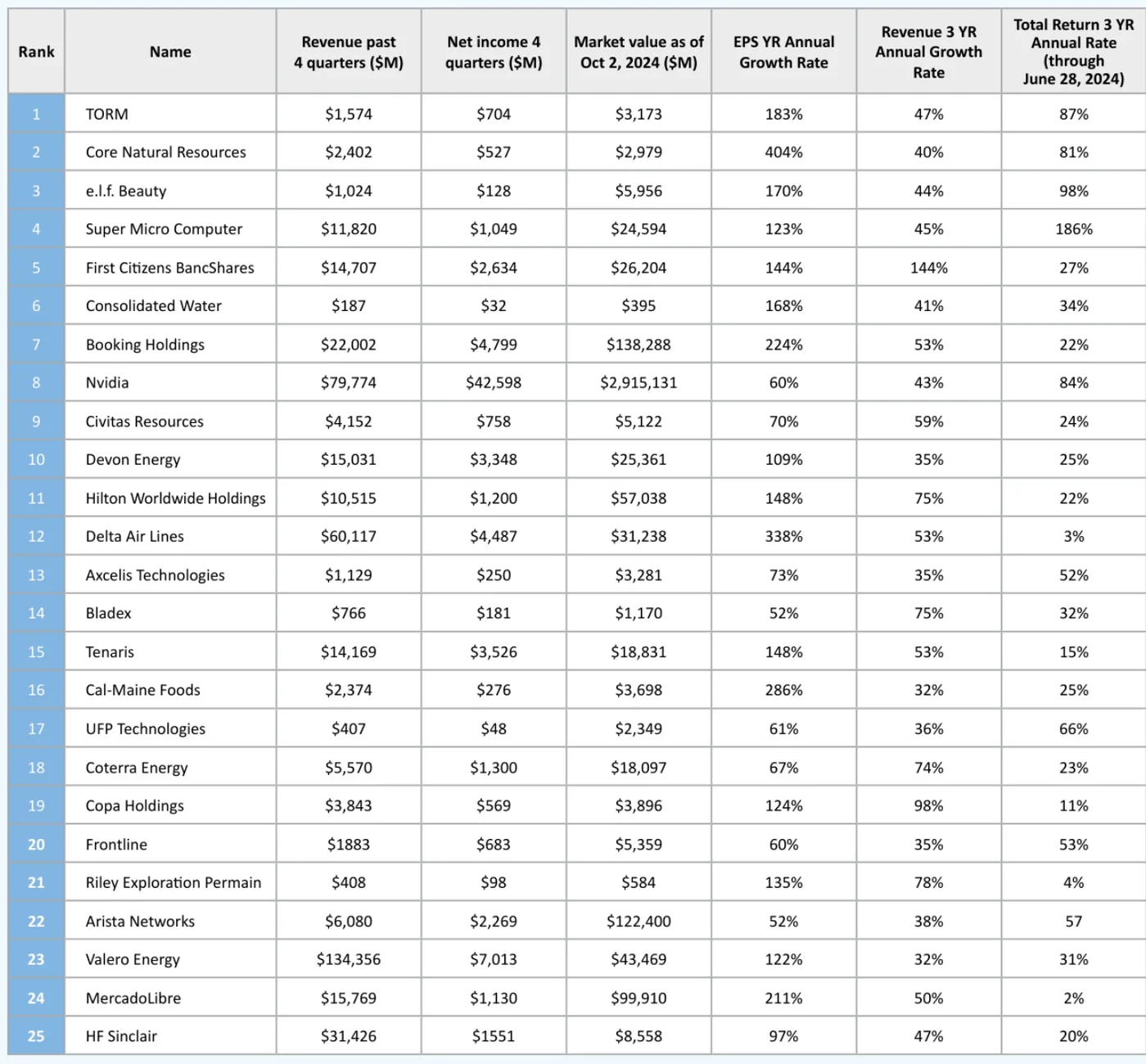
And look at these examples:
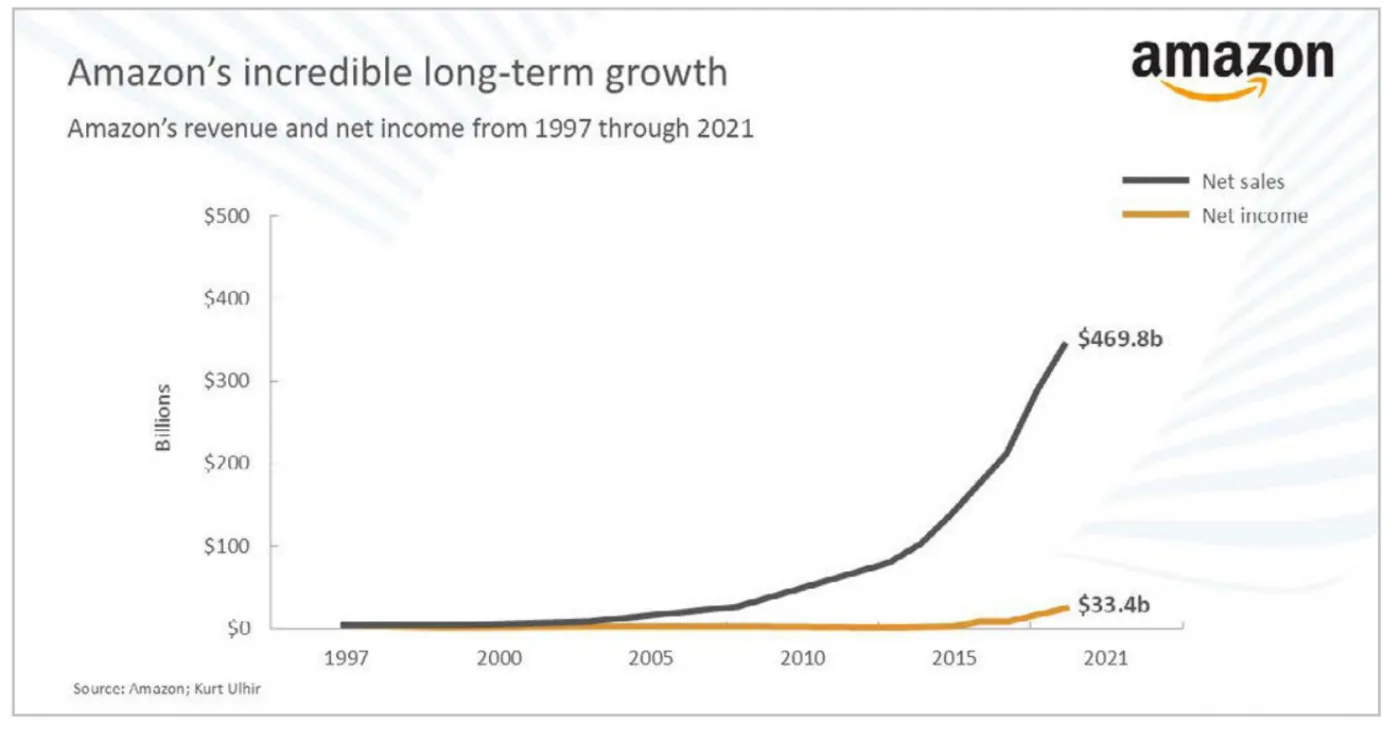
Amazon
Amazon grew from 1997 to 2021 with sales in 2021 of $469.8b and net income $33.4b, showing that innovative technology was a great way to break into the market. People were ready for a different way to buy their books. The company exploited a gap in the market, enabling them to scale the business.
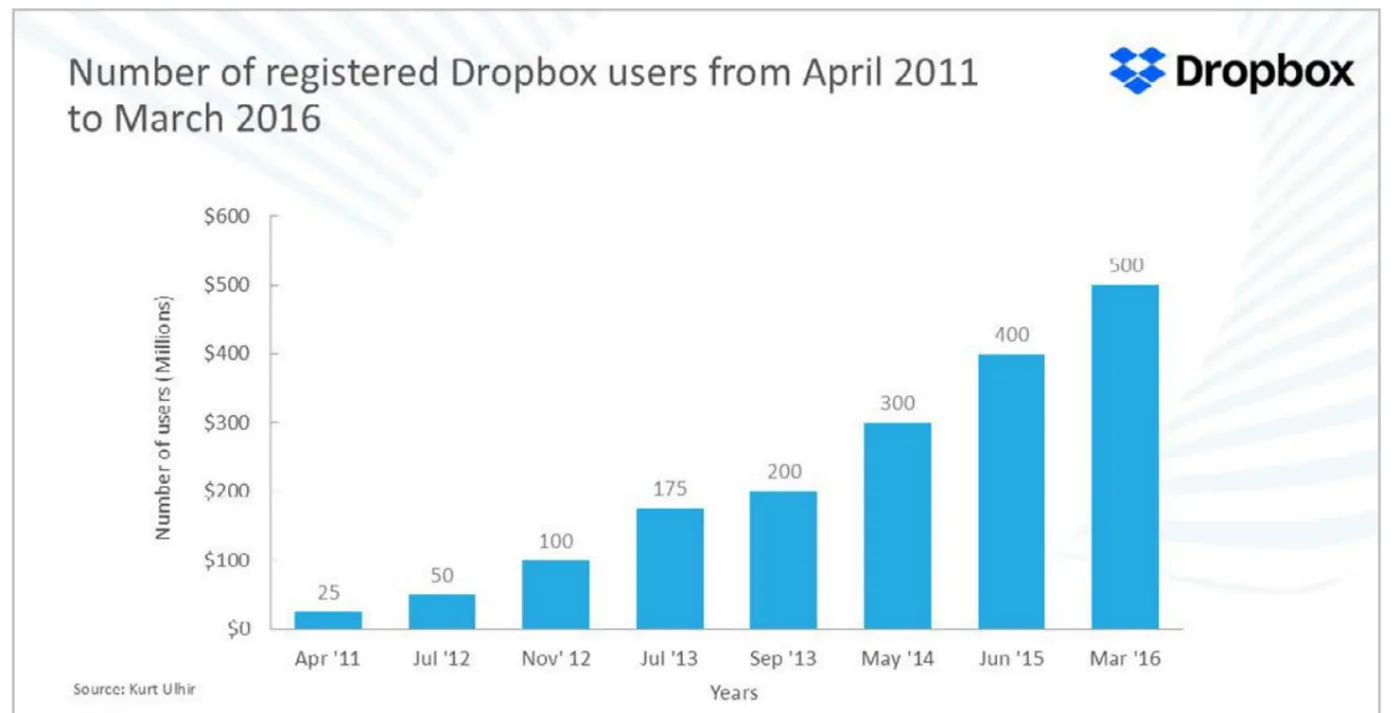
Dropbox
Dropbox reached hypergrowth by reaching 100,000,000 registered users in just five years. The company became one of the fastest growing SaaS companies to reach a $1B revenue run rate thanks to the virality of their freemium offering and the ease and stickiness of its pay plans.
Slack
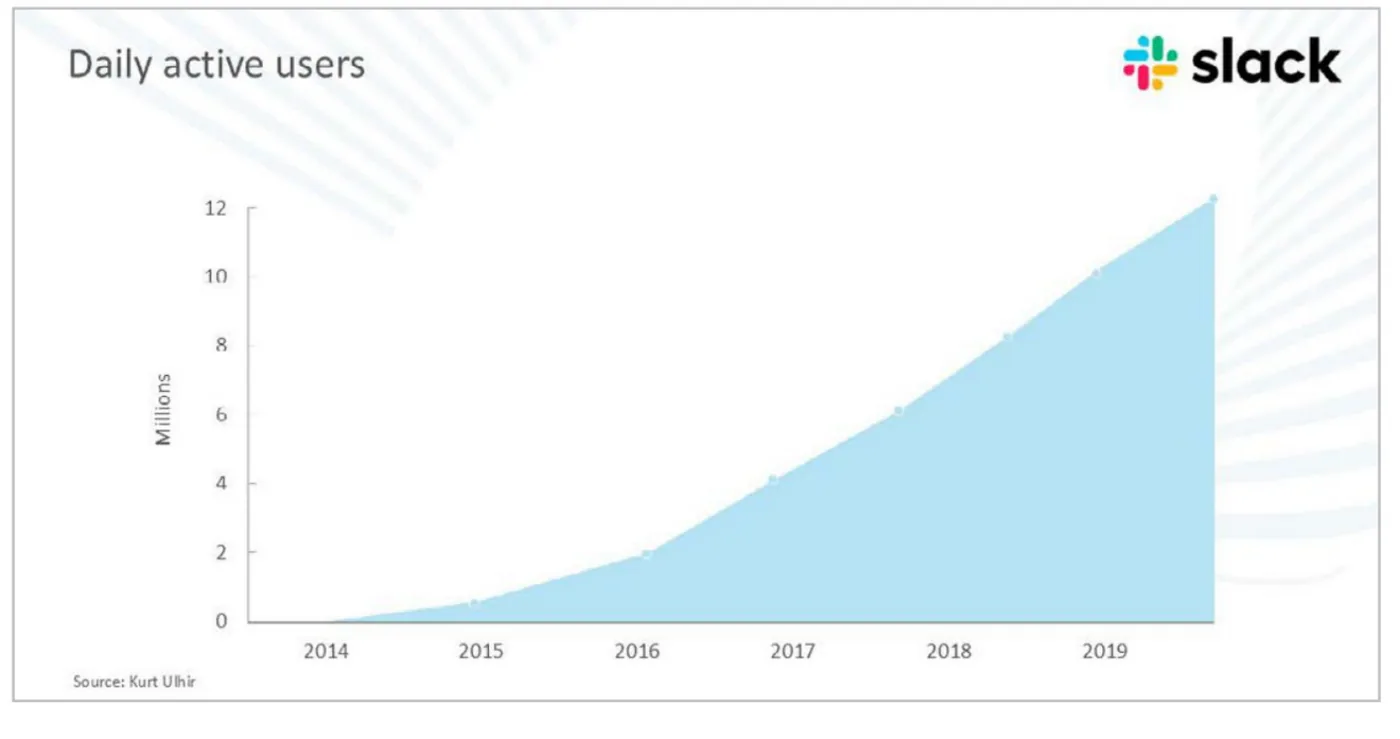
Slack became the fastest-growing enterprise software company ever, growing their revenue from $0 to $10M ARR in just their first 10 months while reaching 10,000,000 active users in a mere five years. In 2019, they exceeded 12 million daily active users. These customers were engaged - Slack is not just a hyper-growth company on paper.
We’ve explored the seven ways hyper-growth companies can test their capabilities. Now, let’s focus on how leaders of hyper-growth businesses can adapt their leadership approach.
What makes hyper-growth businesses stand out?
Focused leadership, a strong culture and innovation are top of the list. But, in our experience, hyper-growth businesses also excel at strategic storytelling and sharing their vision with their customer base and stakeholders. Businesses are often too busy getting on with the day-to-day running of the company. Hyper-growth leaders, however, figure out their story, catch people’s imaginations and share the magic (well, maybe not the trade secrets!). Their excitement and enthusiasm are infectious. And this is essential for venture capitalists or pre-IPO. Plus, they’re skilled at spotting emerging trends and adapting their messaging to meet new markets while remaining relevant to existing customers.
We love the statement by Kurt Uhlir, “Hyper-growth teams succeed because they have strong ideas held loosely”. That’s exactly right. They have a clear vision but are prepared to adapt. If the data shows something isn’t working, ditch it and move on. Flexibility, innovation and customer engagement should be embedded in every process. Look at our section on Adaptive Capability in Challenging Teams where the most effective teams react flexibly to change and challenges.
Hiring focused leadership
Hyper-growth companies understand the value of competent, focused leadership. Hyper-growth businesses often fail because the company’s leadership get so focused on rapid growth that they’re unable to focus on the inevitable challenges that arise. Whereas successful hyper-growth companies hire leadership that can focus on both scaling the business and scaling other business areas to match the company’s growth. Good business leaders do much more than share a vision for the company’s growth. They also move the business forward by spotting emerging trends and constantly adapting to the constantly changing market. While remaining focused on the overall vision, they also focus on executing a business strategy to achieve their business objectives.
Building and leading high-performing teams at scale
In traditional companies, leadership structures are already well-defined. In hyper-growth businesses, leaders must constantly reshape and expand the leadership team while maintaining cohesion.
In the early stages, founders and executives are involved in every decision. However, as a company scales, leaders must empower teams and build a leadership pipeline. Maintain a challenger mindset. Encourage a culture of agility, experimentation and risk-taking. And that’s what we advocate in the Robust Challenge section of Challenging Teams, where members are encouraged to voice their opinions. If team members feel the environment is supportive enough, they’ll voice wild ideas, which could just be where your next multimillion-pound product will come from. But they have to feel safe enough to do that.
Making your employees feel valued
We’ve talked about how you hire new talent for a hyper-growth company. But you also need to consider your existing employees. It takes a cohesive team of qualified, motivated professionals to bring out the best in your brand. As we’ve explored, you’ll only achieve that by developing a healthy company culture. Hyper-growth companies accomplish this by incentivising their employees to bring their best to every project and encouraging them to share ideas in an open, stress-free environment.
Building a strong culture of appreciation and mutual respect is vital if you’re to maintain your company’s momentum during hypergrowth. Delegate - don’t micromanage. Encourage your team to take on new responsibilities. This will help your company to flex as it encounters the unknown. And reward employees for their hard work as the company succeeds so they’re even more motivated to deliver a worthwhile product. Retaining your staff also means you’ll spend considerably less time filling roles and training new hires.
Hyper-growth teams succeed because they have strong ideas held loosely”. Kurt Uhlir
Growth without breaking
Every hyper-growth company will face growing pains. You’ll face operational challenges, leadership gaps, culture struggles and market shifts. But companies that scale successfully don’t just grow fast; they grow smart.
The key is to be prepared. Anticipate setbacks, adapt quickly and maintain team morale in rocky times. Make sure you conduct regular risk assessments to identify potential weak points and build contingency plans for market downturns or operational bottlenecks. Effective hyper-growth companies stay agile and are ready to pivot when necessary.
The question is not just how quickly you grow but how well you scale. Hypergrowth is a marathon, not a sprint— run it wisely.
We hope you’ve found the article useful and would love to hear any thoughts or war stories.
Sources and further reading
These sources explore the characteristics of high-growth companies and the challenges of sustaining growth.
1. Shestakofsky, B. (2025). “The labor of assetization: producing Hyper Growth” inside a tech startup. Socio-Economic Review, 23(1), 445-468. This study provides an in-depth examination of how venture-backed startups achieve rapid asset value inflation through ceaseless experimentation and organizational strategies.
2. Zahra, S. A. (2023). “Scaling-up: Building, Leading and Sustaining Rapid Growth Over Time. Journal of Management Studies, 60(1), 1- 15. This special issue introduction discusses the theoretical and empirical frontiers of research on scaling and high-growth firms, offering a multi-dimensional conceptualisation of scaling as a dynamic capability.
3. Brown, R., & Mawson, S. (2022). How firms catalyse and sustain periods of high growth. International Small Business Journal, 40(7), 697–722. The article reviews alternative streams of research on firm growth, including random growth, ‘responsive growth’ and ‘resourceful growth’, and provides insights into how firms initiate and maintain high-growth phases.
4. Zhang, J., Kempes, C. P., Hamilton, M. J., Tao, R., & West, G. B. (2021). Scaling laws and a general theory for the growth of public companies. arXiv preprint arXiv:2109.10379. This paper develops a scaling framework to reveal systematic behaviours across publicly traded companies, providing a quantitative theory for their growth dynamics.
5. Malyy, M., Tekic, Z., & Podladchikova, T. (2021). The value of big data for analysing growth dynamics of technology-based new ventures. This study demonstrates that web-search traffic information, particularly Google Trends data, is a credible source for analysing the growth trajectories of technology-based new ventures.
6. Aigner, A. A., & Schrabmair, W. (2020). Startup & Unicorn Growth Valuation. The authors present a method to value companies that have recently IPOed, providing a benchmark to compare stocks against each other based on linear extrapolation of revenues and profits.
7. Mason, C., & Brown, R. (2014). Entrepreneurial ecosystems and growth-oriented entrepreneurship. Final Report to OECD. This report examines the components and conditions of entrepreneurial ecosystems that foster high-growth firms, offering policy recommendations to support growth-oriented entrepreneurship.
8. Coad, A., Daunfeldt, S. O., Johansson, D., & Wennberg, K. (2014). “Whom do high-growth firms hire?” Industrial and Corporate Change, 23(1), 293–327. This research investigates the employment practices of high-growth firms, shedding light on their hiring patterns and the characteristics of their workforce.
9. Henrekson, M., & Johansson, D. (2010). Gazelles as job creators: a survey and interpretation of the evidence. Small Business Economics, 35(2), 227. The paper surveys evidence on high-growth firms, often referred to due to their significant role in job creation and economic development.
10. Moreno, A. M., & Casillas, J. C. (2007). High-growth SMEs versus non-high-growth SMEs: a discriminant analysis. Entrepreneurship & Regional Development, 19(1). This study differentiates between high-growth and non-high-growth SMEs, identifying key factors that contribute to rapid growth in small and medium-sized enterprises.