Executive summary
Most senior teams are not high-performing, and the most senior teams are often the weakest in their organisations. Yet organisations led by high-performing teams generate about 23% more economic value, and it is rare for a poorly performing team to lead a financially high-performing organisation.
We assessed 408 senior teams against 50 characteristics, with ratings from the teams themselves, their colleagues and a board member, and related the results to financial performance relative to industry peers, led by organic growth and cash conversion. One factor stood out. The ability to surface and productively address disagreement was both the strongest link with success and the strongest link with failure. It rarely appears without trust and time invested in relationships.
Other traits matter too: cognitive diversity rather than demographic diversity alone; a team size and way of working suited to the task; first-rate expertise in every seat, with leaders willing to act on poor fit (every leader we asked wished they had acted sooner); effective meetings; the ability to repair ruptures; an enterprise mindset that puts the organisation before any function; meaning in the work; a reliable annual cadence; and a strong work ethic.
Start at the next meeting. Notice when the team agrees for the sake of harmony, ask what has been left unsaid, and make it expected that colleagues disagree before a decision rather than after it.
In this paper
- A reality check
- The Cost of Avoiding Conflict
- Why Conflict is a Sign of Health
- A Leader’s Responsibility
- Cognitive Diversity Requires Deliberate Attention
- Can Teams Adapt Their Size?
- A Ready Reckoner for Team Modes
- The Reluctance to Act
- The Impact on Team Performance
- Why Effective Meetings Matter
- Adapting Meeting Styles to the Task
- The Challenge of Repairing Ruptures
- Leading the Repair Process
- The Real Challenge: Managing Ego
- Breaking the Functional Silo Mentality
- Build Teamwork Skills
- Building an Enterprise Culture
- Recognising the Competitive Advantage
- Key Variables Google Found Unconnected to Team Effectiveness
- Your call to action: building teams that win
- Sources and further reading
‘Health today drives performance tomorrow’ was the central thesis of the book, Beyond Performance, published in 2011 by Colin Price, global leader of McKinsey’s Organisation Practice and his colleague Scott Keller. Empirical research underpinning the book demonstrated that various dimensions of organisational health, such as alignment on direction, execution at pace and the ability to adapt to new challenges are key predictors of economic value creation.
Although Beyond Performance acknowledged the importance of teams as the driving force behind organisational improvement, it did not explore how to build great teams. This omission was primarily due to the difficulty of gathering robust data on team dynamics.
By 2017, Colin had become CEO of Heidrick Consulting and Sharon Toye was a Senior Partner. Together, they published Accelerating Performance, which built upon Beyond Performance and highlighted the critical role of speed in organisational success. The global business landscape had changed dramatically, barriers to entry had fallen and companies faced intense competition from new, highly digital players, often based in emerging economies. Speed, when applied strategically rather than chaotically, had become essential for survival and growth.
Today, in a data-rich world, we can analyse team behaviours and correlate them with performance in ways that were unimaginable a decade ago. As a result, Accelerating Performance placed teams at the forefront. Data from over 3,000 business teams was collected and linked to various financial performance metrics. The findings were clear:
• Most teams are not high-performing. This is evident in both self-assessments and evaluations by stakeholders. Our findings align with research conducted by Heidrick & Struggles and the University of Southern California’s Centre for Effective Organisations. In a survey of 60 top HR executives from Fortune 500 companies, only 6% agreed with the statement: “The executives in our C-suite are a well-integrated team.”
• High-performing teams lead organisations that generate approximately 23% more economic value. Our estimate is modest compared to other studies, research from Judge Business School at Cambridge University suggests an even greater impact. And Reuters reported a 10-year longitudinal study of 160 British companies found that the quality and effectiveness of the top team accounted for a 43% variation in profitability across businesses.
• It’s extremely rare for a poorly performing team, i.e., a team ill-disciplined in behaviours and governance, to lead a financially high-performing organisation. This tends to occur only in monopolistic or state-operated entities.
• The most senior teams - those just below the board - are less likely to be high-performing than other teams within the same organisation. This is likely due to conflicting priorities at the executive level.
• The closer a team is to the customer, the more likely it is to be high-performing.
Since Accelerating Performance, Colin has spent several years working in private equity-backed businesses, while Sharon has focused on individual and team development. We’ve undertaken further studies to move from general principles to specific insights, throughout which our key research question has been: “What are the few critical characteristics that best predict the success of a business team?”
This question is crucial because effective teamwork remains a challenge. The chart below highlights just a few of the many obstacles teams face.
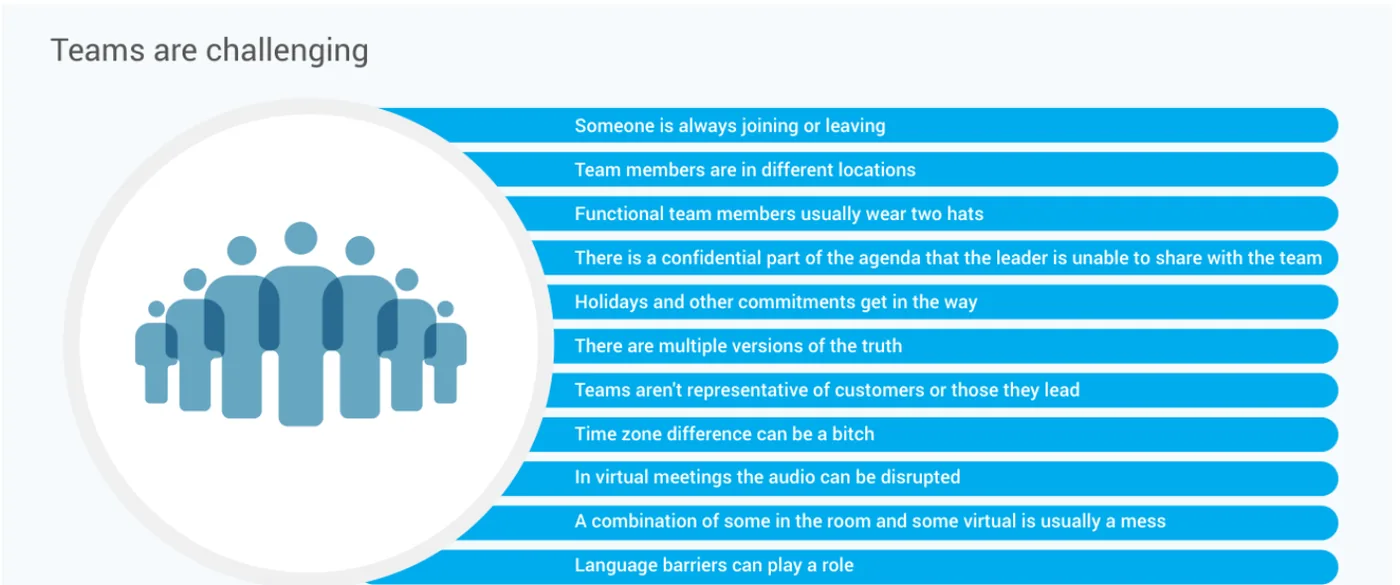
Our research was designed to deepen our understanding of how to foster effective teamwork. Naturally, we wanted to take a highly data-driven approach—our standard method for studying organisations. Team effectiveness, however, is perhaps the area of business research most susceptible to the author’s own biases. Advocates of diversity tend to attribute team success to greater diversity. Process-focused thinkers argue that better systems and structures are the key. Even the choice of questions used to evaluate a team’s effectiveness often reflect underlying biases. To mitigate this, we prioritised a rigorous, numbers-based methodology. That said, if chart rankings were the ultimate measure of success, Robbie Williams surpassing The Beatles for the most UK No. 1 albums would suggest that numbers alone don’t tell the whole story.
To counteract potential bias, we leveraged the AI engine Perplexity to generate a list of 50 characteristics of high-performing teams. In our previous work on the impact of strong leadership, Leadership Alpha, we used ChatGPT for similar purposes. However, given the rapid evolution of AI, we have transitioned to Perplexity, as it’s considered more adept at handling nuanced topics.
Speed, when applied strategically rather than chaotically, had become essential for survival and growth.
50 Characteristics of high-performing teams
1. Clear Vision: A shared understanding of the team’s purpose and direction.
2. Defined Goals: Specific, measurable objectives that guide the team’s efforts.
3. Strong Leadership: Leaders who inspire and support team members.
4. Open Communication: Free flow of information and ideas among team members.
5. Trust: Confidence in each other’s abilities and intentions.
6. Respect: Valuing diverse perspectives and contributions.
7. Accountability: Taking responsibility for individual and team performance.
8. Collaboration: Working together effectively to achieve common goals.
9. Diversity: A mix of skills, backgrounds, and experiences.
10. Challenge: Ability to surface and productively address disagreements.
11. Adaptability: Flexibility in responding to change and challenges.
12. Continuous Improvement: A focus on learning and development.
13. Supportive Environment: Encouragement and assistance among team members.
14. Recognition: Acknowledgment of individual and team achievements.
15. Empowerment: Giving team members autonomy and authority.
16. Shared Values: Common beliefs that guide behaviour and decision-making.
17. Effective Meetings: Productive gatherings with clear agendas and outcomes.
18. Role Clarity: Understanding individual responsibilities within the team.
19. Emotional Intelligence: Awareness of emotions and interpersonal dynamics.
20. Goal Alignment: Individual goals that support team objectives.
21. Resource Availability: Access to necessary tools and information.
22. Cohesion: Strong bonds and relationships among team members.
23. Commitment: Dedication to the team’s success and goals.
24. Creativity: Encouragement of innovative thinking and solutions.
25. Focus on Results: Prioritising outcomes and performance.
26. Mentorship: Opportunities for guidance and skill development.
27. Feedback Culture: Regular and constructive feedback mechanisms.
28. Decision-Making: Collaborative processes for making choices.
29. Conflict Management: Systems for addressing and resolving issues.
30. Work-Life Balance: Support for personal well-being alongside work.
31. Shared Leadership: Leadership distributed among team members.
32. Inclusivity: Valuing and integrating diverse perspectives.
33. Commitment to Teamwork: Prioritising team success over individual agendas.
34. Domain Expertise: All individuals in the team have first-rate skills.
35. Risk-Taking: Willingness to take calculated risks for innovation.
36. Celebration of Success: Recognising and celebrating victories together.
37. Strong Work Ethic: A collective commitment to hard work and excellence.
38. Alignment with Organisational Goals: Contributing to the broader purpose.
39. Effective Delegation: Assigning tasks based on strengths and expertise.
40. Crisis Management: Ability to navigate challenges and emergencies.
41. Team Norms: Established guidelines for behaviour and collaboration.
42. Performance Metrics: Clear standards for evaluating success.
43. Innovation Encouragement: Fostering a culture that welcomes new ideas.
44. Relationship Building: Investing time in developing personal connections.
45. Supportive Feedback: Constructive criticism that promotes growth.
46. Celebration of Diversity: Valuing different viewpoints and backgrounds.
47. Open-Mindedness: Willingness to consider new ideas and approaches.
48. Focus on Learning: Commitment to personal and professional development.
49. Sustainability: Long-term thinking in decision-making and practices.
50. Fun and Enjoyment: Creating a positive and enjoyable team atmosphere.
We recruited 408 senior teams to assess themselves and be evaluated by at least three colleagues within their organisation, one of whom had to be a board member. Our sincere thanks go to all the participants who were willing to be so transparent in this process. The respondents represented a broad range of industries and geographic locations, though our dataset had a slight bias toward private equity portfolio companies—perhaps reflecting the need for speed in such environments, which makes executives more receptive to learning.
We weighted the board’s perspective and the team’s self-assessment equally while assigning a lower weighting to the views of other evaluators. We then analysed financial performance through three key metrics:
• Organic growth relative to industry peers over a four-year period, accounting for 50% of the total weighting. We prioritised this metric as our research in Accelerating Performance identified organic growth as the strongest predictor of future enterprise value.
• EBITDA growth compared to competitors, contributing 25% of the weighting.
• Cash conversion relative to industry peers, also making up 25% of the total weighting.
By this stage, we had a clear understanding of the strengths and weaknesses of 408 teams and could correlate their capabilities with the financial performance of their organisations or the part of the organisation they lead.
The remainder of this article outlines our key findings and aims to inspire action among team leaders.
A reality check
Before diving into the data, let’s acknowledge a common tendency among team leaders. Many tell us, “Our problems stem from external challenges—our task is inherently difficult, senior leadership doesn’t understand us, regulators are overly strict, or technology has let us down.” While external pressures are real, it’s difficult for many leaders to accept that their team’s internal dynamics may also be a contributing factor. Yet research has been clear for over 50 years—team effectiveness plays a critical role in overall success.
When Google launched its groundbreaking study on team performance (described in more detail below), researchers recruited 699 participants, divided them into small groups, and assigned tasks requiring various types of collaboration. In one exercise, teams brainstormed creative uses for a brick. Some generated dozens of innovative ideas, while others simply rephrased the same concepts repeatedly. In another task, groups planned a shopping trip, with each team member receiving a unique grocery list. Success required teammates to sacrifice personal preferences for the collective good. Some teams navigated the challenge effortlessly, while others struggled to reach consensus and left their shopping carts half-empty.
Dysfunctional norms hindered even the most talented individuals.
What fascinated researchers most was the consistency of performance across tasks. Teams that excelled in one challenge tended to do well across all assignments, while teams that struggled in one area often failed across the board. The decisive factor wasn’t individual intelligence or technical expertise—it was the way team members treated one another. Constructive team norms boosted collective intelligence, whereas dysfunctional norms hindered even the most talented individuals.
Your organisation may face fierce competition, technological disruptions and regulatory constraints— but that’s the reality of business. The real challenge is improving your team’s ability to navigate these obstacles effectively.
The chart below summarises our thinking on how teams with the right characteristics can accelerate performance.
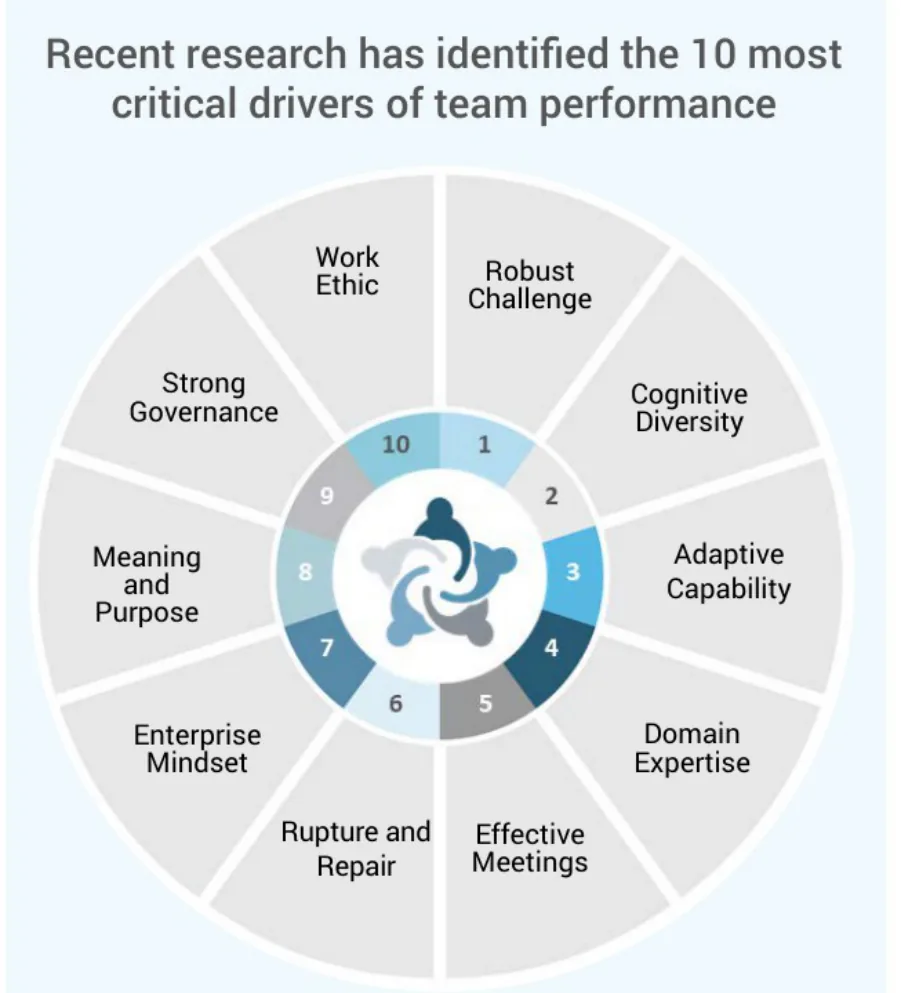
Let’s explore the 10 characteristics in more detail.
1. Robust challenge
We initially expected that a handful of the 50 factors we assessed would be the strongest drivers of success, while a different subset would correlate most with failing teams. We were wrong. One factor, Challenge: Ability to surface and productively address disagreements (Item 10), was both the most highly correlated with success and the most strongly associated with failure.
For those unfamiliar with social science research, this is a striking finding. It’s rare for a single factor, out of 50, to play such a decisive role in both positive and negative outcomes.
Given the significance of this result, we conducted follow-up interviews with 42 organisations that scored highest on this dimension. We wanted to understand what they were doing differently to foster productive challenge. Here are our three key insights:
• High challenge scores were almost always accompanied by high scores in Trust: Confidence in each other’s abilities and intentions (Item 5) and Relationship Buliding: Investing time in developing personal connections (Item 44). While psychological safety is not explicitly included in our 50-item framework, it’s reasonable to infer that a high-trust environment, reinforced by strong personal bonds, creates the psychological safety necessary for challenge to be welcomed rather than feared.[1]
• The best team leaders actively ‘mine for conflict’. They don’t passively wait for disagreements to surface but deliberately seek them out, ensuring that differing views are aired and resolved. Leaders repeatedly emphasised this principle:
“Smile when you find a disagreement—there’s gold in those hills.”
“Harmony doesn’t interest me. It’s the robust clash of ideas that creates value.”
“You can’t be passive. A leader must actively bring disagreements to the surface; otherwise, the team will unconsciously collude to present a united front.”
• Physical presence matters. Teams that spend significant time together in person are far better at handling conflict constructively. Virtual meetings, while efficient for transactional tasks, often fail to foster productive challenge unless a strong foundation of in-person interaction has been established.
Conflict delayed is conflict multiplied.
Business would be pretty bland if everyone agreed with each other. To encourage debate and critical thinking, the organisational psychologist, Adam Grant, outlines three strategies.
• Be 10% more sceptical of people you agree with and 10% more charitable to people you disagree with
• Look for flaws in ideas you like and strengths in arguments you dislike
• Learn from sources that engage with competing ideas Our findings have expanded our understanding of a top team’s role. Yes, it sets strategy alongside the board and manages critical legal, regulatory, and governance responsibilities. But it must also act as a crucible for conflict—a controlled environment where disagreements are brought to the surface and resolved, rather than left to fester and disrupt the wider organisation. When teams embrace this role, they reduce organisational noise and accelerate execution.
The Cost of Avoiding Conflict
We have seen firsthand what happens when top teams fail to act as an effective crucible for conflict. A few years ago, we provided consultancy services to a wealth management firm where the Finance Director and Chief Technology Officer had a fractured relationship. They were outwardly polite but fundamentally disagreed on nearly everything - technology investment, staff bonuses and the capitalisation of IT expenditures, to name a few.
Yet within the top team, these disagreements were carefully avoided. No one addressed them directly, at least not in public. Instead, tensions played out through an organisational psychodrama - subordinates took sides, internal factions formed and vast amounts of energy were wasted on infighting and gossip. Execution suffered.
This is the danger of artificial harmony - the silent killer of organisations. It manifests in polite nods during meetings, in the ‘everything’s fine’ responses when clearly it isn’t, and in the avoidance of difficult conversations for fear of ‘rocking the boat’. More organisations fail due to false harmony than open conflict. When real issues are buried, resentment festers, bad ideas go unchallenged and accountability disappears. Conflict delayed is conflict multiplied. Teams that prioritise ‘getting along’ at all costs eventually collapse under the weight of unspoken problems.
Why Conflict is a Sign of Health
By contrast, genuine conflict, while uncomfortable, is a sign of a high-functioning team. It fuels innovation, strengthens trust and provides insights that consensus-driven cultures miss. Whether it’s a blind spot in strategy, an unchecked assumption, or a better alternative yet to be considered, productive disagreement reveals what easy agreement conceals.
However, this doesn’t mean promoting disrespect or personal attacks. Effective challenge does not begin with “You’re wrong.” It starts with “I’d love to understand your thinking better.” Attacking conclusions shuts people down; questioning reasoning opens minds. And the best debates don’t have winners and losers—they leave everyone more informed.
But challenge is a two-way street. It’s not just the challenger that needs to be brave. The person being challenged needs to take responsibility for how they receive the challenge. ‘I don’t know’ is not an expression of ignorance. It’s an expression of humility. ‘I was wrong’ is not a confession of failure. It’s a display of intellectual integrity. ‘I don’t understand; is not a sign of stupidity. It’s a catalyst for intellectual curiosity.
At your next meeting, see if you feel tempted to agree for the sake of harmony. Instead, ask questions that invite pushback:
• “What assumptions are we making here?”
• “What could go wrong with this plan?”
• “Is there a better alternative we haven’t considered?”
We’re not fond of quotes from Steve Jobs as so many have been proven to be manufactured, but he was kind enough to comment on a book Colin wrote years ago entitled The Wisdom of the CEO. He said, “In weak companies, politics win. In strong companies, the best ideas win.” This principle has stayed with us for 25 years. But let’s also consider a lesson from Alfred P. Sloan, former chairman of General Motors. At a meeting where the top team unanimously agreed on a decision, Sloan responded, “Gentlemen, I take it that we are all in complete agreement on the decision here. Then I propose we postpone further discussion until our next meeting to give ourselves time to develop disagreement and perhaps gain some understanding of what this decision is about.”
A Leader’s Responsibility
If you’re reading this and thinking “My team doesn’t have this problem”, consider the research. In Originals: How Non-Conformists Move the World, Adam Grant highlights that among nearly 1,000 scientists at the U.S. Food and Drug Administration, over 40% feared retaliation for raising safety concerns. At a large technology firm, half of the 40,000 employees felt unable to express disagreement at work. In a broader study spanning consulting, finance, media, pharmaceuticals, and advertising, 85% of employees admitted they had chosen not to speak up about an important issue.
Conflict avoidance is human nature. As a leader, your role is to create a culture where challenge is encouraged, not suppressed. Boil it down to a simple thought experiment: When a team member has an unconventional idea, do you want them to think:
• “I have an idea, but I’m hesitant to share it.”
Or
• “I have a different view, and I know my team will want to hear it.”
The answer to that question reveals whether your team embraces—or fears—robust challenge. And in that simple shift lies the key to a stronger, higher-performing team. Take a look at our paper Leadership Alpha to explore some of the other leadership behaviours that accelerate performance.
More organisations fail due to false harmony than open conflict.
2. Cognitive diversity
There is a finding in our data that we share with some hesitation, given the strong (and often justified) concerns about exclusion and bias that many groups have experienced.
Our data suggests that diversity, in itself, is not strongly correlated with performance. However, nor does high diversity correlate with poor performance.
We’re not alone in this finding. In 2023, the Chartered Institute of Personnel and Development (CIPD) published an excellent report by J. Young and M. Gifford, High- Performance Teams: An Evidence Review. They stated:
“For contemporary teams, a good mix of age, ethnicity, and experience is assumed to enhance effectiveness. However, when we account for team size, team type, and task type, evidence suggests this is unlikely to be the case. Any positive relationship between diversity and effectiveness is small. In some cases, diversity can even negatively impact team cohesion and behaviours such as communication. Nonetheless, organisations should still strive for diversity in teams for ethical reasons, even if it does not necessarily improve effectiveness.”
That is a bold statement for the CIPD to make and commendable for its empirical approach.
Cognitive Diversity Requires Deliberate Attention
In our view, cognitive diversity trumps demographic diversity. To explore this further, we examined Inclusivity: Valuing and integrating diverse perspectives (Item 32) and Open-Mindedness: Willingness to consider new ideas and approaches. (Item 47), both reasonable proxies for diversity of thought rather than demographic diversity. Somewhat to our relief, these traits showed a notable correlation with performance across our dataset. More strikingly, in companies that relied heavily on innovation for competitive advantage, the correlation was particularly strong. As Deloitte found in 2018, “cognitive diversity (diversity of thought, values, and personalities) on a team enhanced innovation by 20%.”
This left us with an important question, “How can leaders actively foster cognitive diversity?” Especially as unlike demographic diversity, which is more visible, cognitive diversity is harder to identify and cultivate.
Cognitive diversity trumps demographic diversity.
From our research, we identified several practical strategies used by high-performing teams. While not all will suit every team, consider whether a few of these might enhance creativity and decision-making in yours:
• Appoint a devil’s advocate (akin to De Bono’s ‘Black Hat’) for every discussion to ensure critical viewpoints are considered.
• Be intentional with language. Structure team agendas to promote engagement. Replace words like ‘review’ and ‘consider’ with ‘debate’ and ‘decide’.
• Dedicate the last five minutes of every meeting to asking each team member for one thing that could have improved the discussion. No debate allowed or it will take all day.
• Disrupt seating habits. People unconsciously sit in the same spots each meeting. Change the arrangement periodically to encourage new dynamics.
• Use tools like the HBDI (Herrmann Brain Dominance Instrument) to assess cognitive styles within the team and compare results.
• Leaders should speak last. This prevents them from unintentionally influencing discussion before hearing diverse perspectives.
• Invite fresh voices. Occasionally bring in external speakers, junior staff, customers, or suppliers to broaden viewpoints.
• Prioritise team bonding. Spending time together in informal settings fosters trust, making open debate easier.
• Hire for difference, not similarity. Actively seek out individuals who bring contrasting perspectives to the team.
Encouraging cognitive diversity takes effort but the rewards of enhanced creativity, stronger decision-making and a more resilient team make it well worth the investment.
3. Adaptive capability
Adaptability: Flexibility in responding to change and challenges (Item 11) proved to be a crucial factor for companies that rely more on innovation than execution for success.
Conventional wisdom suggests that small teams outperform large ones. However, when conducting research for Accelerating Performance, we found no direct correlation between team size and performance. While we mentioned this in the book, we didn’t explore it in detail - partly because so many trusted colleagues and clients thought we were mistaken.
On deeper analysis, we now conclude that team size should be determined by the nature of the task. Some challenges are best tackled by small teams, while others require larger groups. Our dataset of 408 teams initially showed no correlation between team size and performance. However, this was due to an ‘averages of averages’ problem. In reality, the relationship follows a bimodal distribution - sometimes small teams excel and other times larger teams are more effective.
An outstanding study by Wu, Wang, and Evans ( Large Teams Develop Science and Technology; Small Teams Disrupt It ) closely aligns with our findings. If you need disruption, breakthrough thinking and solutions to complex problems, small teams are the best choice. Conversely, if the goal is flawless execution, managing cross-disciplinary efforts, or mobilising widespread support, a large team is the better option. However, in larger teams, both leaders and members must possess stronger teamwork skills to maintain effectiveness.
It’s worth noting that Wu et al. reviewed 50 million data points in their study - an impressive demonstration of how AI enables powerful meta-analyses.
Can Teams Adapt Their Size?
A compelling question, one we have not empirically tested, is whether teams can flex their size based on the task at hand. Anecdotally, we are seeing more organisations adopt extended leadership team structures. One example comes from a private equity portfolio company we recently worked with. They gathered 54 people, of whom eight formed the core leadership team, while the rest were considered ‘Culture Carriers’. Careful agenda setting and time management allowed for both crowdsourcing ideas and deep dives with smaller teams. It worked well.
While team size is a visible factor, a more nuanced challenge is how a team operates—and its ability to shift between different working modes. Some organisational challenges demand meticulous attention to detail. Tasks like signing off annual results or approving regulatory submissions require precision, structure and discipline - not unrestrained creativity.
However, other challenges involve navigating the unknown. Questions such as how to enter a new market, predict competitor reactions or launch a digital offering without cannibalising existing products require lateral thinking, exploration and play.
Perhaps the best example of this ‘play’ mode arises when real problem-solving is required. It’s tempting to view teams primarily as coordination mechanisms - structures that help manage operations efficiently. And in large organisations, coordination is undoubtedly valuable.
Yet, a higher purpose of a team may be deep problem-solving. Teams contribute in two distinct ways:
1. Collaborative problem-solving. When diverse expertise is combined, especially with cognitive diversity, it can generate innovative solutions to complex challenges.
2. Empowering leadership to focus on major issues. Counterintuitive as it may seem, some teams function most effectively when they take responsibility for running the business, freeing leaders (such as CEOs) to tackle the biggest problems and opportunities. This is particularly relevant in founder-led startups and scale-ups, but we also suspect leaders like Bill Gates and Jensen Huang spend more time on problem-solving than coordination.
A Ready Reckoner for Team Modes
The chart below provides a simple heuristic for aligning team behaviour with different types of challenges.
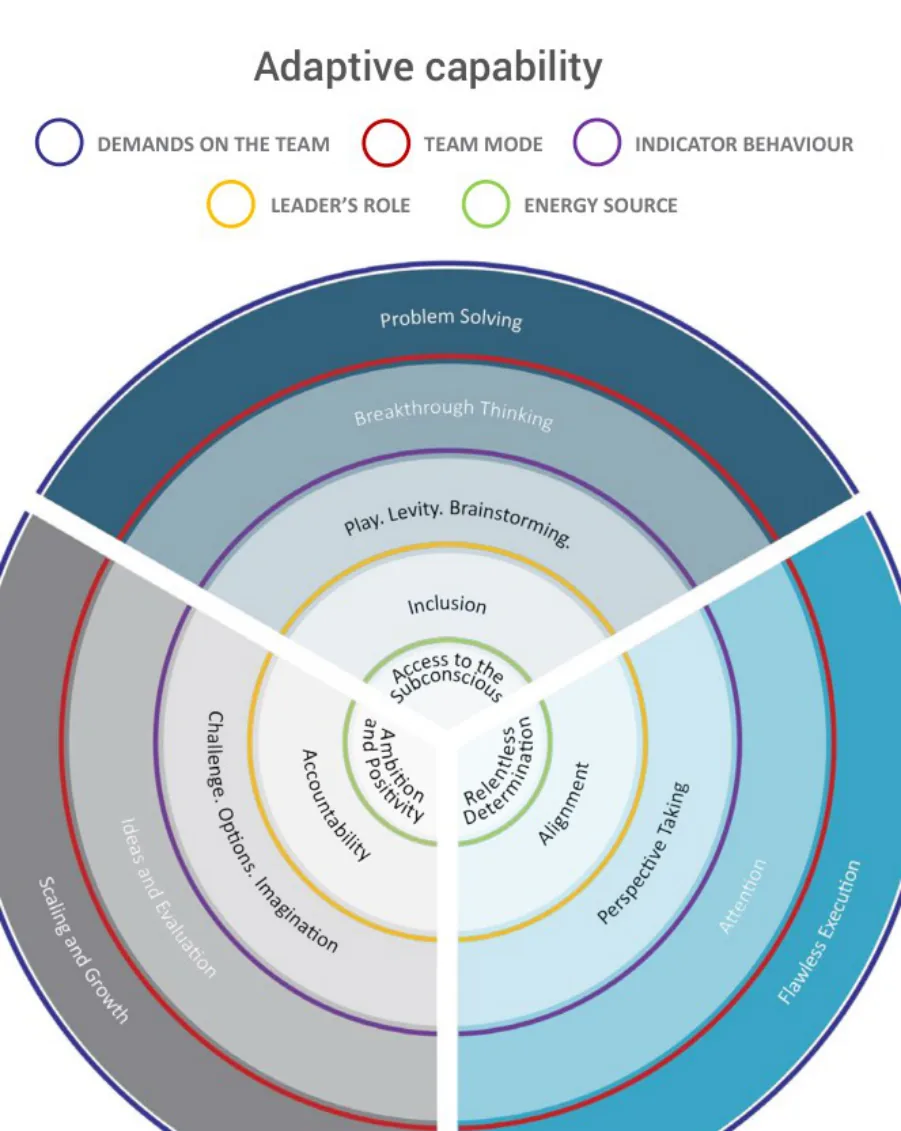
Think of this tool a little like a kaleidoscope you may have played with as a kid. As you turn the tube, things come into focus. The graphic illustrates that different challenges on the team require different modes from the team, and those modes are brought to life through certain behaviours. Of course, it isn’t as simple as ‘one meeting, one mode’. Teams need to be able to shift modes and behaviours based on the content they are grappling with many times in a single meeting. The leader of this flock of starlings is you, the team leader. You need to be able to signal when it’s time for an adjustment. And the team needs to have the repertoire in place to enable those shifts.
A significant question for you to consider before you identify which mode the team needs to be in, is what level of interdependence of team members does the work of the team require? We always start by asking team leaders ‘how much of a team does this team need to be?’. The level of interdependence between team members will be a key influence on ‘how’ you apply the mode you’re working in.
While the tool is, of course, an oversimplification, it raises important questions:
• Is our team stuck in the same mode all the time?
• Are we skilled at adjusting our approach to match the task?
• Can we shift modes seamlessly, with everyone understanding the behavioural changes required?
• Can we think bigger while starting smaller?
• Can we start fewer things but finish more?
Flexibility in team structure and working style may be one of the most valuable adaptive capabilities for modern organisations.
The leader of this flock of starlings is you, the team leader. You need to be able to signal when it’s time for an adjustment.
4. Domain expertise
It may seem obvious, but great teams require great people. However, great people are not necessarily the most highly educated. A comprehensive 2011 meta-study by A. Bell, which analysed over 1,000 studies, concluded unequivocally that there was no correlation between educational level and team performance, regardless of team type.
Our previous research strongly indicated that Domain Expertise: All individuals in the team have first-rate skills (Item 34) would be highly correlated with team performance. To explore this further, we examined a specific aspect of the issue: the speed at which team leaders remove underperforming members.
This is a complex and subjective topic. What defines underperformance? If an exit is based on values misalignment, what constitutes a severe enough breach? How much coaching, training, or support should be provided before making the decision?
To gain insight, we asked team leaders two simple questions:
1. Think of the last person you removed from your team - how long did it take from decision to action?
2. Do you wish you had acted sooner or taken more time?
The responses to the first question varied significantly. Private equity firms tend to exit underperformers far more quickly than publicly traded companies. Countries with strong labour protections, such as Germany, or deeply ingrained cultural norms, such as Japan, take significantly longer than the U.S.
However, the second question revealed something striking: 100%. Every single respondent wished they had acted sooner.
The Reluctance to Act
Why do leaders delay these decisions? Perhaps it reflects a fundamental part of human nature - we don’t like to give up on people. Or maybe it’s more self-serving: we struggle to accept the cognitive dissonance of admitting we made a poor hiring decision. Fear of difficult conversations also plays a role.
So, do you have someone on your team that your instincts tell you is not the right fit? If so, is the issue skill or will?
The term ‘fit’ is important. This is not about labelling individuals as ‘good’ or ’bad’ - rather, it’s about whether someone is the right match for the company or team at its current stage of development.
Meg Whitman, former CEO of Hewlett-Packard and eBay, encapsulates the challenge perfectly, “You can always move faster than you think to get the right team in place. I wish I had moved faster.”
She adds, “At eBay, someone who was perfect when it was a $40 million company was not quite so perfect when it grew to $4 billion.”
And it is important to act. In a survey by Atlassian in 2022, 26% of individuals said they had a ‘bad apple’ on their team, making them consider leaving the company they were working for.
The Impact on Team Performance
Domain expertise is a key driver of team cohesion. In a team, affection is optional, but respect is essential. Allowing weak performers to remain sends a clear message: excellence is not required.
If the team doesn’t believe in the expertise of its members, trust erodes, morale declines, and performance suffers. A high-performing team is one where every individual contributes at a level that commands respect from their peers.
5. Effective meetings
According to our data, Effective Meetings: Productive gatherings with clear agendas and outcomes (Item 17) is one of the most critical traits of high-performing teams. And when you consider that on average CEOs have approximately 37 meetings each week, which accounts for 72% of their time (Zippia.com), it’s crucial those meetings are productive.
Colin has long been frustrated by how many simple yet essential meeting practices are either absent or actively disregarded. While the following list is not a direct outcome of our research, it serves as a well-founded rant on common meeting pitfalls.
Do you allow any of these?
• Open laptops, where team members pretend to engage but are actually clearing their inboxes
• Side conversations that derail focus
• Low-quality attention and disengagement
• Lack of pre-circulated materials
• No concise, one-page summary outlining required decisions for each agenda item
• No fixed annual meeting calendar, resulting in shifting dates and uncertainty
• No systematic tracking of action points with clear deadlines
This is not about labelling individuals as ‘good’ or ’bad’. It’s about whether someone is the right match for the company or team at its current stage of development.
Sharon, a psychotherapist, expresses her concerns more diplomatically than Colin but has her own “must-not-do” list:
• Conversations that resemble a tennis match, with ideas being batted back and forth but little real listening or synthesis
• Language that, consciously or unconsciously, belittles others
• Team members who stay silent during the meeting but complain in the hallway afterwards
• Hours of wasted executive time listening to status updates rather than making decisions or solving problems
• Agenda items that lack clear purpose, expected outcomes or specific asks of the team
• Domination of discussions by the loudest voices, suppressing diverse perspectives
Why Effective Meetings Matter
It was surprising, even to us, that effective meetings ranked so highly in our data. But in hindsight, it makes sense: meetings are where many other critical team dynamics manifest themselves in practice.
Many well-known techniques can improve meetings:
• Amazon’s empty chair - a reminder that the customer must always be represented
• Tripping.com’s 30-minute egg timer - with a $5 fine for any organiser who exceeds the time limit
• Asana’s ‘Meetings Doomsday’ experiment - where all meetings were deleted and only essential ones reinstated
• Slack and similar platforms - used to replace unnecessary meetings for straightforward topics
None of these are revolutionary. The real questions are, “Does the team leader know what ‘good’ looks like?” “And do they hold themselves and their team accountable for it?”
Adapting Meeting Styles to the Task
Linking back to Adaptive Capability, meetings should not all be approached in the same way. A skilled leader adapts based on the meeting’s purpose:
• Execution-focused meetings require decisiveness, discipline and efficiency
• Strategic meetings on scaling the business demand collaboration, listening and open-minded discussion
• Creative problem-solving meetings benefit from space for reflection, deep thinking and even tapping into subconscious insights
The most effective team leaders read the moment and help the team shift gears seamlessly, ensuring that every meeting serves its intended function.
Video calls may have become a regular feature of working life but don’t assume that virtual technology will magically improve your team meetings. According to a recent article in The Times, Zoom fatigue has become as common a workplace malady as repetitive strain injury. Studies have shown video conferencing is linked to higher levels of anxiety, stress, tiredness and self-loathing. This is endorsed by a team of American academics who surveyed 2,448 workers and found that there was a correlation between those who agreed with “I am depressed about how my face looks” and those who don’t embrace video conferencing.
Senior management teams have also reported that so many meetings on Zoom have led to less productivity and slower decision-making. JP Morgan boss, Jamie Dimon, recently railed against Gen Z employees saying, “A lot of you were on the f------ Zoom ... and you were doing the following: looking at your mail, sending texts to each other about what an a------ the other person is, not paying attention, not reading your stuff. And if you don’t think that slows down efficiency, creativity, creates rudeness – it does.” (The Telegraph, Feb 24)
6. Rupture and repair
As discussed earlier, a team’s ability to bring conflict to the surface and channel it productively is critical. It’s unrealistic to expect that teams will always operate harmoniously—tensions, interpersonal strain and even hurt feelings are inevitable. However, a small set of interrelated factors, when present and reinforced, allow a team to rupture and repair effectively. These include:
• Open Communication (Item 4)
• Supportive Environment (Item 13)
• Emotional Intelligence (Item 19)
• Conflict Management (Item 29)
When one of these traits is strong, the others are often strong as well.
Does the team leader know what ‘good’ looks like?
The first step is for all parties to acknowledge the rupture has taken place and not just brush the problem under the carpet. Making the repair is not simply about apologising or moving on. It requires deliberate effort to rebuild psychological safety, reaffirm trust and ensure that the same issues do not resurface in destructive ways.
Our research suggests that the ability to repair ruptures is one of the most important signs of a team’s long-term success. In fact, high-performing teams are not those that avoid conflict but those that recover from it quickly and constructively. The ability to acknowledge mistakes, seek understanding and take corrective action separates great teams from dysfunctional ones.
The Challenge of Repairing Ruptures
The difficulty with repairing team ruptures is similar to meditation—when you need it most, you’re often too stressed to engage in it. When tensions escalate and relationships fracture, it can be incredibly difficult to take a step back and do what is necessary to rebuild trust.
Personality plays a role here, but so surprisingly, does genetics. Research suggests that genetic variations can influence how individuals experience and recover from stress. For example, Colin had his genome mapped and discovered he carries a val158met polymorphism in the COMT gene. This gene affects the production of an enzyme responsible for breaking down epinephrine and norepinephrine (adrenaline-related hormones). With this variation, adrenaline clearance takes four times longer than average—meaning that when Colin experiences stress or frustration, he remains agitated for much longer than others. That’s his excuse anyway! Sharon would say he needs to build physiological habits that calm his central nervous system down by either actively releasing adrenalin or balancing it out with positive hormones such as oxytocin.
Although we are only beginning to understand how genetics shape behaviour, it’s intriguing to consider whether, in the future, team members might share their genetic predispositions instead of (or alongside) traditional assessments like Myers-Briggs or Belbin Team Roles.
Leading the Repair Process
Until that day, team leaders must set the standard for repairing broken psychological contracts. The process itself is not complicated; it relies on open dialogue, admitting mistakes, active listening and other well-known conflict resolution tools. In our consulting work, we sometimes facilitate mediation processes for individuals or entire teams. The framework we use is simple but effective:
1.Identify the rupture
• Acknowledge the event or behaviour that caused the breakdown
• Recognise the underlying emotions driving the conflict
2. Pause and reflect
• Count to ten and resist the urge to react defensively
• Take time to understand your role in the situation
3. Acknowledge the issue
• Validate concerns without assigning blame
• Show that you recognise the impact on others
4. Facilitate open dialogue
• Create a safe space for honest, non-judgmental conversation
• Focus on perspectives, saying ‘I felt’ rather than ‘You did’
5. Collaborate on solutions
• Agree expectations moving forward
• Work together to address the root issues and prevent recurrence
6. Commit to follow-up
• Maintain accountability and check in to ensure trust is being rebuilt
• Reinforce a culture where feedback and open discussion are the norm
The Real Challenge: Managing Ego
While the ‘how’ of rupture and repair is relatively simple, the real challenge lies in managing one’s ego. True leadership in conflict resolution requires prioritising the health of the team over personal pride or emotions. The best leaders recognise that healing the team is more important than winning the argument.
Remember your team will be watching you. You will set the tone for how ruptures are handled. So if you model avoidance, defensiveness, or blame, your team will follow suit. Conversely, if you demonstrate humility, openness and a commitment to resolution, it creates an environment where repair is not just possible but expected.
The best teams are not those that never break - they are the ones that know how to mend.
One CEO we worked with made it a practice to end leadership meetings by asking, “Is there anything left unsaid?” This simple habit created space for unresolved tensions to surface before they escalated into deeper fractures. Teams that embrace rupture and repair as natural processes develop extraordinary resilience. They become more adaptable, more innovative and more capable of handling high-stakes challenges. The goal is not to eliminate conflict but to ensure that when it arises, it is navigated with skill, care, and accountability.
Ultimately, the best teams are not those that never break — they are the ones that know how to mend.
7. Enterprise mindset
Effective teams understand a fundamental truth: the success of the organisation comes before the success of any one individual. This is the essence of enterprise mindset, a critical yet often elusive trait that separates high-performing teams from those mired in internal competition, conflicting priorities, and misaligned incentives.
In our research, board members consistently rated Commitment to Teamwork: Prioritising team success over individual agendas (Item 33) the core of enterprise mindset as one of the most important factors for team success. Yet, paradoxically, senior executives tended to rank it lower. Why? Because the very nature of leadership roles often incentivises executives to prioritise their own functions, teams, or individual achievements over broader enterprise-wide goals. And as organisations grow in complexity, spanning multiple geographies, products, and functions, this misalignment becomes even more pronounced.
If left unchecked, this fragmented mindset can erode trust, slow down execution and create power struggles that sap an organisation’s energy. It’s the difference between a leadership team that pulls together in the same direction and one that operates as a loose coalition of self-interested players.
So how do we bridge this gap? How do we cultivate an enterprise mindset that ensures leaders think and act in ways that benefit the whole?
Breaking the Functional Silo Mentality
One of the most common pitfalls in leadership teams is functional myopia where executives become so absorbed in their own domains (finance, marketing, technology, etc.) that they lose sight of the broader enterprise objectives. Each function may excel on its own, but when misalignment exists at the top, it cascades downward, creating inefficiencies, turf wars, and a lack of collaboration across the business.
High-performing executive teams do not think in silos. They actively cultivate a culture where every leader feels accountable for the success of the entire business, not just their own department.
You’ll hear team members talk about ‘our goals’ rather than ‘my goals. And instead of each executive setting isolated functional KPIs, high-performing teams define shared enterprise-wide objectives that every leader is accountable for. So, rather than a Head of HR being solely measured on retention rates and an R&D lead on product development speed, they would both be held accountable for a joint measure like customer satisfaction or revenue growth which ensures mutual investment in the bigger picture.
Build Teamwork Skills
Recently, we worked with a client who employs many highly intelligent PhD scientists; super-smart, fascinating to talk to and extremely committed. However, they struggled significantly with teamwork. Their collaboration skills, ability to influence and delegation skills were lacking. They also often got bogged down in excessive detail. Why should we assume that someone with an IQ of 140 would naturally excel at teamwork? This is backed up by Team Stage’s research which found that although almost 75% of employees consider collaboration essential for workplace engagement, only 18% have their communication skills assessed during performance reviews. And according to Flair HQ, a mere 27% receive training in communication. Training doesn’t have to mean sending individuals on formal courses. Sometimes, the most effective approach is to reflect on performance as a team and identify areas for improvement. This method is not only more cost-effective but often more impactful than traditional training courses.
Building an Enterprise Culture
A team leader’s ability to foster enterprise mindset within their team is one of the biggest determinants of organisational success. However, many team leaders underestimate how deeply ingrained operational mindsets can be and fail to challenge their teams to think beyond their own areas. It’s your responsibility to call out siloed behaviour and to encourage individuals to make decisions for the good of the whole company.
So when tough strategic choices arise, reframe the conversation around enterprise impact. Instead of saying, “What’s best for marketing? Or finance? Or operations?” ask “What decision maximises value of the organisation, even if it means trade-offs in individual departments?”
Recognising the Competitive Advantage
Organisations that successfully embed enterprise mindset into their leadership teams create a powerful strategic advantage. They move faster, execute more effectively and drive sustained high performance by ensuring that every leader prioritises what’s best for the business as a whole, not just their own domain.
As a leader, ask yourself:
• Am I thinking and acting in a way that benefits the entire organisation or am I primarily focused on my function?
• Do I encourage collaboration across teams or do I unconsciously reinforce silos?
• Am I rewarded for driving enterprise-wide impact or just for individual success?
The best leaders, those who drive lasting success, are the ones who make enterprise mindset not just a philosophy but a daily practice.
One of the most common pitfalls in leadership teams is functional myopia.
8. Meaning and purpose
One of the most in-depth studies on team behaviour was Google’s Project Aristotle, launched in 2012 to understand the factors that make teams effective. Named after Aristotle’s famous quote, “The whole is greater than the sum of its parts,” the initiative shares its ethos with the Japanese proverb, “None of us are as smart as all of us.”
A key finding from the project was that ‘Meaning Matters’, a concept that may seem obvious at first glance, but which is vital for team success. Alignment with Organisational Goals; Contributing to the broader purpose (Item 38) was one of the strongest factors to predict poor economic performance. A lack of purpose and meaning leads to poor performance.
But can there be a powerful purpose in every role? Absolutely. The purpose of a call centre agent in an insurance claims unit is to assist customers during difficult times. The purpose of a teacher is to shape the minds of tomorrow. The purpose of a clerk in a suburban stationery shop is to serve the customer. Of course, a brain surgeon may find it easier to connect to a sense of purpose than other roles, but Google’s findings were strikingly similar to ours: there are various ways to link people to purpose:
• Alignment with Personal Values: Employees find greater meaning in their work when it aligns with their personal beliefs, values, or passions.
• Personal Growth and Mastery: Opportunities to develop new skills and grow professionally create a deeper sense of purpose
• Recognition and Appreciation: Feeling valued by colleagues and leadership reinforces the importance of one’s contributions.
• Autonomy and Ownership: Having control over tasks and decision-making enhances a sense of purpose.
Are you actively leveraging these factors with your team? How effective are your storytelling skills? Regularly sharing stories about the team’s or the company’s impact is an excellent way to foster meaning. Stories hold tremendous power over our attitudes, beliefs, and behaviours - including our desire to contribute to a team. They stimulate our brains and help us understand the world in ways that only age-old traditions can.
This is backed up by hard results too. Statistics show that companies led by highly proficient communicators among their leadership witnessed a 47% greater total return to shareholders over the last five years when compared to firms where communication effectiveness among leaders was lower. (Teambuildinghub)
So, be sure to share stories that link your team’s efforts to the people who benefit from their work. Whenever possible, collect and share specific examples of how your team has positively affected colleagues, clients or the community.
And if you think storytelling won’t resonate with your highly analytical colleagues, think again. We all enjoy films, songs, plays, and poems. We thrive on stories.
Key Variables Google Found Unconnected to Team Effectiveness
While discussing Google’s research, it’s worth noting the key variables they measured that were found to have no significant impact on team effectiveness:
• Colocation of teammate
• Consensus-driven decision-making
• Extroversion of team members
• Workload size
• Team size
• Tenure
We firmly agree with these findings. Google’s longitudinal results and our performance correlations align closely.
None of us are as smart as all of us.” (Japanese proverb)
9. Strong governance
Is your annual team cadence planned well in advance and consistently followed? According to our research, it’s likely that it’s not.
Let us share a personal story. A few years ago, Colin collaborated with Jüerg Zeltner, who was the CEO of Wealth Management at UBS. Those familiar with UBS will remember Jüerg as a dynamic and energetic leader. Colin, Jüerg and a close colleague from UBS, Jakob Stott, eventually left their respective organisations to raise capital and purchase a stake in Kredit Bank of Luxembourg (KBL), now known as Quintet.
In the early stages of their venture, Jüerg was diagnosed with an inoperable brain tumour. Sadly, we didn’t have long with him after the diagnosis and it was a tragic time for Jüerg, his family and friends.
Despite the circumstances, Jüerg continued to work diligently. Colin recalls a conversation they had during this difficult time, focused on what Jüerg hoped to achieve before it was too late. Jüerg emphasised two things:
1. A cadence for leadership
2. An operating manual
The mention of a ‘cadence’ came as a surprise. What did he mean by that? It turned out he wasn’t referring to quarterly earnings reports or board meetings in the traditional sense. He meant something deeper, a structured, repeatable rhythm that could serve as the heartbeat of the organisation.
Jüerg’s cadence would integrate governance, leadership forums, client engagements, talent development, and operational reviews in a way that created stability and clarity. It was a system to prevent drift, a way to ensure that even in moments of uncertainty, there was a guiding structure to rely on.
It was a profound insight. So many leaders leave behind strategies, but few leave behind systems that make strategy sustainable. Jüerg understood that organisations do not thrive on ideas alone; they thrive on rituals, on shared moments of reflection and on a framework that ensures focus even when leadership changes.
As for the operating manual, it wasn’t what you might expect. It became known as the Jüerg Zeltner Operating Manual, a four-page guide detailing how best to work with Jüerg. It focused on statements like, “I am at my best when...”, “You can count on me to...” and “What I need from you is...”.
It was raw. It was real. It was a reflection of a man who had no time left for politics, for ambiguity or for posturing. Instead, it was a deeply human articulation of what it meant to lead with purpose, to foster trust and to work in a way that was both high-performing and profoundly personal.
Jüerg understood that governance isn’t just formal committees and the like, it is a personal commitment. And team members are residents, not visitors. They’re bound by serious commitments to each other and strong governance is essential to reinforce these obligations.
Jüerg was not just a leader in name; he was a leader in spirit, in energy and in the way he approached people and business with relentless clarity and purpose. His story is a challenge to lead with intention, to create systems that endure and to leave behind something greater than ourselves. He believed in the potential of people and teams to achieve something greater than themselves.
A framework that ensures focus even when leadership changes.
10. Work ethic
Our final topic, Strong Work Ethic: A collective commitment to hard work and excellence (Item 37) consistently ranks among the top 10 in our data, regardless of country, industry or ownership type. In High-performing Teams: An Evidence Review, a scientific summary by Barends, Rousseau, Cioca and Wrietak, there’s an insightful passage:
“A team is not automatically more effective than (a group of) individual employees. Working in teams may hinder performance due to potential conflicts between individual and group interests,” (as we discussed earlier in enterprise mindset). And, “In addition, team performance may decline due to social loafing: the tendency for team members to get by with less effort than they would have put in if working alone (also known as the free-rider effect).”
This is a key point. A team is not defined simply by calling itself one. It’s possible for a so-called team to function as a risk-sharing mechanism for individuals who lack the will or ability to contribute fully. Sir Alex Ferguson, the legendary Manchester United manager, famously said, “Once you bid farewell to high standards and discipline, you say goodbye to success.” He’s absolutely right. When people know there will be follow-up, they tend to find a way to succeed.
On a more optimistic note, there’s good news. Clear Vision: A shared understanding of the team’s purpose and direction (Item 1) strongly correlates with work ethic (p = .81). It seems the clearer the vision, the more committed people are to working hard.
Contrary to what you may think, people enjoy grappling with tough stuff and discovering solutions to problems with their colleagues. A survey run by Asana Labs discovered that employees’ idea of fun at work revolves around:
• Diverse discussions with hard-to-swallow topics
• Work-related brainstorming sessions with colleagues
• Time for creative thinking with a colleague or as a group A Stanford study also found that employees who acted collaboratively stuck at their tasks 64% longer than their solitary peers, whilst also reporting higher engagement levels, lower fatigue levels and higher success rates.
Balancing intensity with psychological safety is key. Sir Alex Ferguson is a fearsome figure, known for his famous boot-throwing incident with David Beckham, among other things. So, how do you foster a strong work ethic while maintaining an environment where psychological safety allows conflict to lead to better outcomes? One approach is to place the customer, and more importantly, the creation of value for the customer, at the centre of the team’s work. Thyagi Thyagarajan, an independent director at Tata Consultancy Services, said, “Employees have no fear of being fired by the company. What they fear is being fired by the customer. If the customer is unhappy, that’s what employees fear.”
We would take this idea even further. For us, the most effective way to ensure a strong work ethic is for each individual to take ownership of the team’s goals. Engagement fosters ownership. A great example comes from the science field, not business. In 2013, Cash et al. studied a group of scientists working on improved varieties of wheat and corn in developing countries. The study found that a strictly sequential approach, where scientists first developed crops in the lab or field and then handed them over to farmers, didn’t lead to widespread use. However, when farmers were involved earlier in the process, treated as partners with the scientists, the team produced crops that were widely adopted.
This was a matter of eating or starving, of life or death, but ownership was still the determining factor in success. Apply the same logic to your team.
Your call to action: building teams that win
Teams are the engine of every organisation, yet most struggle to reach their full potential. The difference between mediocrity and excellence isn’t luck, it’s leadership, intentionality and the courage to challenge. High-performing teams don’t just happen; they’re built with purpose, trust and a relentless commitment to improvement.
With communication being the linchpin to leadership and organisational success, it’s no surprise that a survey by Front in 2021 showed high-performing teams exchanged the following communications:
• 10 phone calls per day while average-performing teams reported 6
• 19 emails while average teams reported 11
• 3 instant messages per day while average teams reported 1
Our data is clear too: teams that welcome challenge, embrace cognitive diversity and execute with discipline drive exceptional results. Avoiding conflict, tolerating underperformance or settling for artificial harmony are silent killers of progress. Instead, great teams lean into discomfort, debate ideas rigorously and push one another toward better outcomes.
Now, the challenge is yours. Gallup reports that team leaders play a significant role in determining 70% of the variability in team engagement. So, as a leader, will you foster a culture where the best ideas win? Will you create an environment where people feel safe to challenge, contribute and grow? Will you align your team around a shared vision and execute with clarity and accountability?
The strongest teams don’t just survive change, they drive it. They set new standards, disrupt the status quo and elevate the organisations they serve. The choice is simple: lead a team that plays it safe or build a team that transforms the future.
The opportunity is in front of you. Take it.
Sources and further reading
For those of you who share our obsession with bringing hard facts to the ‘soft stuff’, here are a few references on team behaviour and performance that we regard as highly rigorous.
These references cover various aspects discussed in the article, including team performance, psychological safety, conflict management and the importance of effective communication in team dynamics. They provide a solid academic foundation for the concepts presented in this article.
1. Edmondson, A. C., & Lei, Z. (2014). Psychological safety: The history, renaissance, and future of an interpersonal construct. Annual Review of Organizational Psychology and Organizational Behavior, 1(1), 23-431.
2. Mathieu, J. E., Hollenbeck, J. R., van Knippenberg, D., & Ilgen, D. R. (2017). A century of work teams in the Journal of Applied Psychology. Journal of Applied Psychology, 102(3), 452-467.
3. Lacerenza, C. N., Marlow, S. L., Tannenbaum, S. I., & Salas, E. (2018). Team development interventions: Evidence-based approaches for improving teamwork. American Psychologist, 73(4), 517-531.
4. Kozlowski, S. W. J., & Ilgen, D. R. (2016). Enhancing the effectiveness of work groups and teams. Psychological Science in the Public Interest, 7(3), 77-124.
5. Shuffler, M. L., DiazGranados, D., & Salas, E. (2018). There’s a science for that: Team development interventions in organizations. Current Directions in Psychological Science, 27(5), 353-360.
6. Nembhard, I. M., & Edmondson, A. C. (2016). Making it safe: The effects of leader inclusiveness and professional status on psychological safety and improvement efforts in health care teams. Journal of Organizational Behavior, 27(7), 941-966.
7. Hülsheger, U. R., Anderson, N., & Salgado, J. F. (2019). Team-level predictors of innovation at work: A comprehensive meta-analysis spanning three decades of research. Journal of Applied Psychology, 94(5), 1128-1145.
8. Feitosa, J., & Salas, E. (2020). Today’s virtual teams: Adapting lessons learned to the pandemic context. Organizational Dynamics, 49(3), 100777.
9. Schippers, M. C., West, M. A., & Dawson, J. F. (2015). Team reflexivity and innovation: The moderating role of team context. Journal of Management, 41(3), 769-788.
10. Marlow, S. L., Lacerenza, C. N., Paoletti, J., Burke, C. S., & Salas, E. (2018). Does team communication represent a one-size-fits-all approach?: A meta-analysis of team communication and performance. Organizational Behavior and Human Decision Processes, 144, 145-170.